Mindfulness among daily tasks
If calm attention only existed while seated on a quiet cushion, it would have very little reach in a life filled with trains, spreadsheets, cooking, and family responsibilities. Fortunately, classical Asian contemplative cultures never separated formal posture from ordinary activity. From the Pali instructions on clear comprehension in movement (iriyāpatha) to Zen temple work practice (samu), daily routines are treated as the primary field where attention is tested and steadied.
Walking Meditation: Cankama and Kinhin
In early Buddhist monasteries, stone or earthen walking paths (cankama) were built right beside sitting areas. After sitting, practitioners walked back and forth over a twenty-step path to refresh circulation and integrate alertness with movement. In East Asian Zen, slow group walking between sitting periods is called kinhin.
Indoor Slow Walking (Three-Part Step)
In a hallway or quiet room, walk at a relaxed pace. Notice three distinct tactile phases in each foot: lifting the heel, moving through space, and placing the sole down.
Street Pace Commute
When walking at normal speed outside, you do not need to slow down to a theatrical crawl. Simply keep eyes forward, let your arms swing naturally, and feel the rhythm of your shoes meeting the pavement for one city block.
Household Tasks: Samu and the Tenzo Spirit
In 1237, Eihei Dōgen wrote the Tenzō Kyōkun (Instructions for the Monastery Cook), explaining how washing rice, handling utensils carefully, and putting lids back in place with two hands are direct expressions of undivided attention. Over seven centuries later, the Vietnamese Thiền teacher Thích Nhất Hạnh (1926–2022) wrote famously in The Miracle of Mindfulness about washing dishes: if we wash dishes only to get them over with so we can drink tea, we are not alive during the time we stand at the sink.
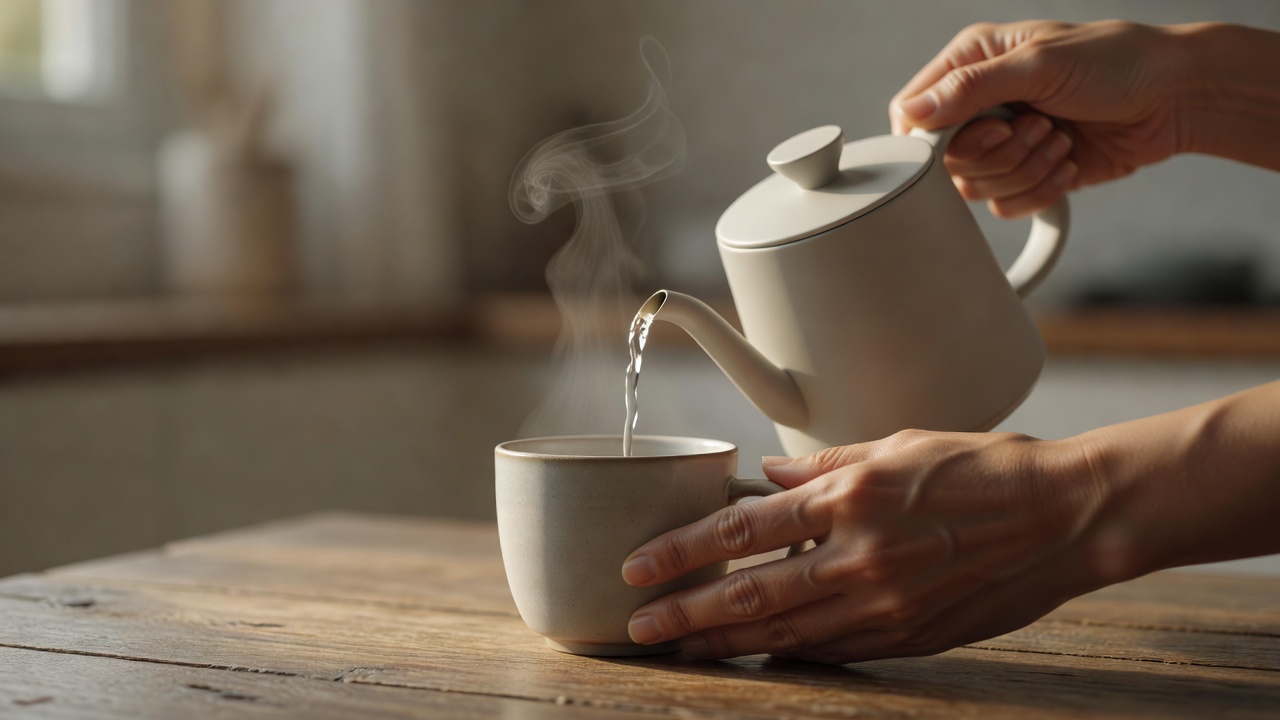
How to turn a household chore into an attention anchor
Micro-Routines for a Busy Workday
Modern cognitive load often accumulates because we jump immediately from one screen task to the next without letting the nervous system register that the previous task has ended. Try inserting one of these brief pauses into existing transitions:
The Threshold Pause
Before clicking "Join Meeting" or turning the handle of your front door at the end of the day, pause for one full inhalation and exhalation to drop residual tension from the previous hour.
First Three Bites Without a Screen
Inspired by monastic meal reflections (Oryoki): before scrolling the news at lunch, eat the first three bites of your meal with your phone face-down, noticing warmth and flavor.
Have a question about fitting practice into your schedule? Read the FAQ or send us a practice question.